
Contact Lenses for the "Hard-to-Fit" Patient
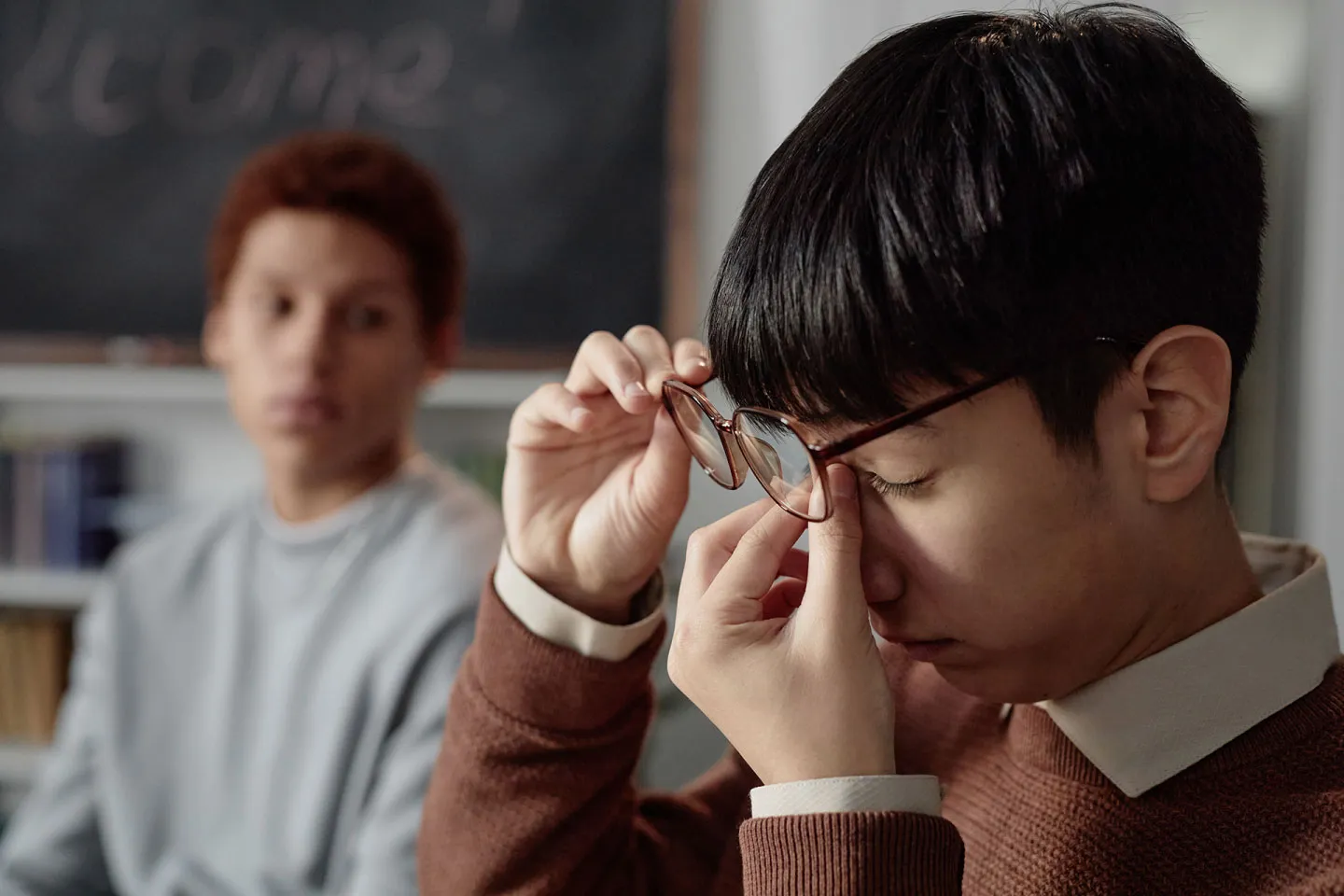
It is not uncommon for patients to have difficulty wearing contact lenses for a number of reasons. Due to the individual eye shape, certain conditions or impairments, or the aftermath of surgery, some patients are considered to be “hard to fit” as contact lens wearers.
For hard-to-fit patients who prefer to wear contact lenses, however, there are options available that can provide comfortable and effective contact lens wear. This will require a specialised fitting with an optometrist who is an expert and knows your condition and the various products available to find the right match for your specific condition. You may be considered a hard-to-fit contact lens candidate if you have one of the following conditions:
- Dry Eyes
- Astigmatism
- Giant Papillary Conjunctivitis (GPC)
- Keratoconus
- Pellucid Marginal Degeneration
- Post-LASIK or other refractive surgery
- Presbyopia (reduced near vision common in individuals aged 40 and over).
- Corneal Scarring
Dry Eyes And Contact Lenses
Dry Eye Syndrome causes your eyes to feel dry, gritty, burning, red, and irritated. Dry Eye Syndrome can also cause blurred vision. Often, these symptoms can worsen with the use of contacts. In fact, many people who do not normally suffer from chronic dry eyes will experience some of these symptoms as a result of contact lens wear.
First of all, if you have chronic dry eyes, you should see your optometrist for treatment and relief before you think about contact lenses. Once your dry eyes are treated, it is safe to try contacts, a nd there are a number of options that can be considered.
Many brands of soft contacts and products, such as disinfectant and cleansing solutions,, ns are made with ingredients that are designed to be more comfortable for individuals with dry eyes. Your optometrist will be able to recommend some of these brands and products to you. Alternatively, gas permeable (GP) or rigid gas permeable (RGP) lenses are made with a hard material that,,t in some cases, does not dry out like soft lenses, and they are able to hold a certain amount of moisture beneath the lens to keep the eye from drying out. Gas-permeable lenses are a very good option and can be quite comfortable for individuals with dry eyes.
Additionally, oan ptometrist might recommend a specific wearing schedule, such as limiting the time you wear your contacts throughout the day or replacing your contacts on a more frequent basis.
Toric Lenses For Astigmatism
Astigmatism is a condition that causes blurred vision (in some cases double vision) because,,e rather than being round, the front of the eye (the cornea) has two curves instead of one, therefore, having two focal points instead of one. This makes it hard for traditional contact lenses to fit and therefore requires specialised contact lenses such as toric lenses or rigid gas permeable lenses (RGPs).
Toric contact lenses are designed to correct astigmatism and custom made to fit the eye of the patient. Most are made of soft material designed to stay in place on the eye; however, in some cases, when the rotation of the lens (due to blinking and eye movement) can’t be stopped, gas-permeable lenses might be tried. Due to the customisation and more complicated fitting process required for these lenses, they are more expensive and take more time for the contact lens laboratory to make than traditional lenses.
Giant Papillary Conjunctivitis GPCc) And Contact Lenses
GPC is a type of conjunctivitis in which the inner surface of the eyelid becomes swollen. The condition can be caused or worsened by a buildup of protein deposits on contact lenses. Your optometrist may either recommend daily disposable lenses or RGP lenses (which are not water-based) and therefore have less of a tendency for protein buildup. Your optometrist may also prescribe medicated eye drops and require you to stop the use of contact lenses until the symptoms improve.
Rigid Gas Permeable (Rgp) Or Gas Permeable (Gp) Lenses
Rigid Gas Permeable (RGP), also known as Gas Permeable (GP) lenses, are effective for many hard-to-fit patients. The hard, oxygen-permeable material lets the eye breathe and significantly reduces the chance of infection due to protein deposits, which tend to harbour bacteria on soft lenses. RGPs also hold moisture under the lens to keep eyes from drying out.
Rigid Gas Permeable (RGP) Lenses For Keratoconus
Keratoconus is a condition in which the cornea thins and bulges forward into a cone shape. Traditional contact lenses may cause some discomfort in these patients, and the vision may still be blurry; therefore, GPs are often used for treatment for mild, moderate, and some severe cases. Rigid gas permeable lenses may help to slow down the cone shape from worsening in some cases. Further, RGPs are able to assist in vision correction for keratoconus, which is often not possible with soft contacts or even eyeglasses.
Post-Lasik Or Vision Correction (Refractive) Surgery
While LASIK surgery has a very high success rate, there are vision complications and symptoms that sometimes remain. Night vision after LASIK, in particular, can sometimes give you side effects such as glare or halos around lights. RGPs are often effective in helping with these side effects and restoring clear vision.
Bifocal And Multifocal Contact Lenses For Presbyopia
Presbyopia is a common condition, ie, people usually over 40 years old, in which the eyes’ ability to focus on close objects is impaired. Many people keep a pair of bifocal or multifocal glasses on hand for times when they have to read menus, newspapers, books, and other objects that require near vision. For those who prefer contact lenses over eyeglasses, bifocal and multifocal contact lenses are an option.
For some patients who have presbyopia and need correction for distance vision as well, one option is monovision. Monovision is a contact lens fitting process in which you wear a contact lens in one eye for distance vision and the other contact lens in your other eye for near vision. Another option is multifocal contact lenses. In this contact lens fitting process, both eyes are usually fitted for distance vision, and both eyes are used for near vision at the same time. Both contact lens fitting options usually take about one week for the brain and the eyes to adjust.
If you have one of these conditions or find contact lens wear difficult for another reason, speak with your optometrist. As technology improves, there are more and more options for hard-to-fit contact lens patients to benefit from and the convenience of contact lens use.


Your Vision, Our Priority
At Eyesight.sg, we provide comprehensive eye care, from routine check-ups to advanced solutions. Our services are delivered by trusted optometrists across Singapore. Call us to schedule an appointment for your spectacles, contact lenses, or specialist lens needs. You can also drop by any time to explore our wide range of designer spectacle frames and sunglasses.

Why Choose Eyesight.sg?
- Experienced & Certified Optometrists
- Advanced Diagnostic Technology
- Personalised Care for All Ages
- Multiple Locations Across Singapore

Ready for Better Vision? We’re Here for You at Eyesight.sg.
West Mall Branch
Address: West Mall Shopping Centre, 1 Bukit Batok Central, #04-05, Singapore 658713
Phone: +65 6792 5733
Email: hello@eyesight.sg
Mon–Sun: 11am–9 pm
Tampines Branch
Address: 827 Tampines Street 81, #01-146, Singapore 520827
WhatsApp: +65 9824 1607
Email: hello@eyesight.sg
Mon–Sun: 11am–9 pm
Potong Pasir Branch
Address: 51 Upper Serangoon Rd, #01-07 The Poiz Centre, Singapore 347697
WhatsApp: +65 8809 5996
Email: hello@eyesight.sg
Mon–Sun: 11am–9 pm


© 2026 Eyesight.sg | All Rights Reserved | Privacy Policy | Digital Marketing by Remedo