
What Are Contact Lens Exams?
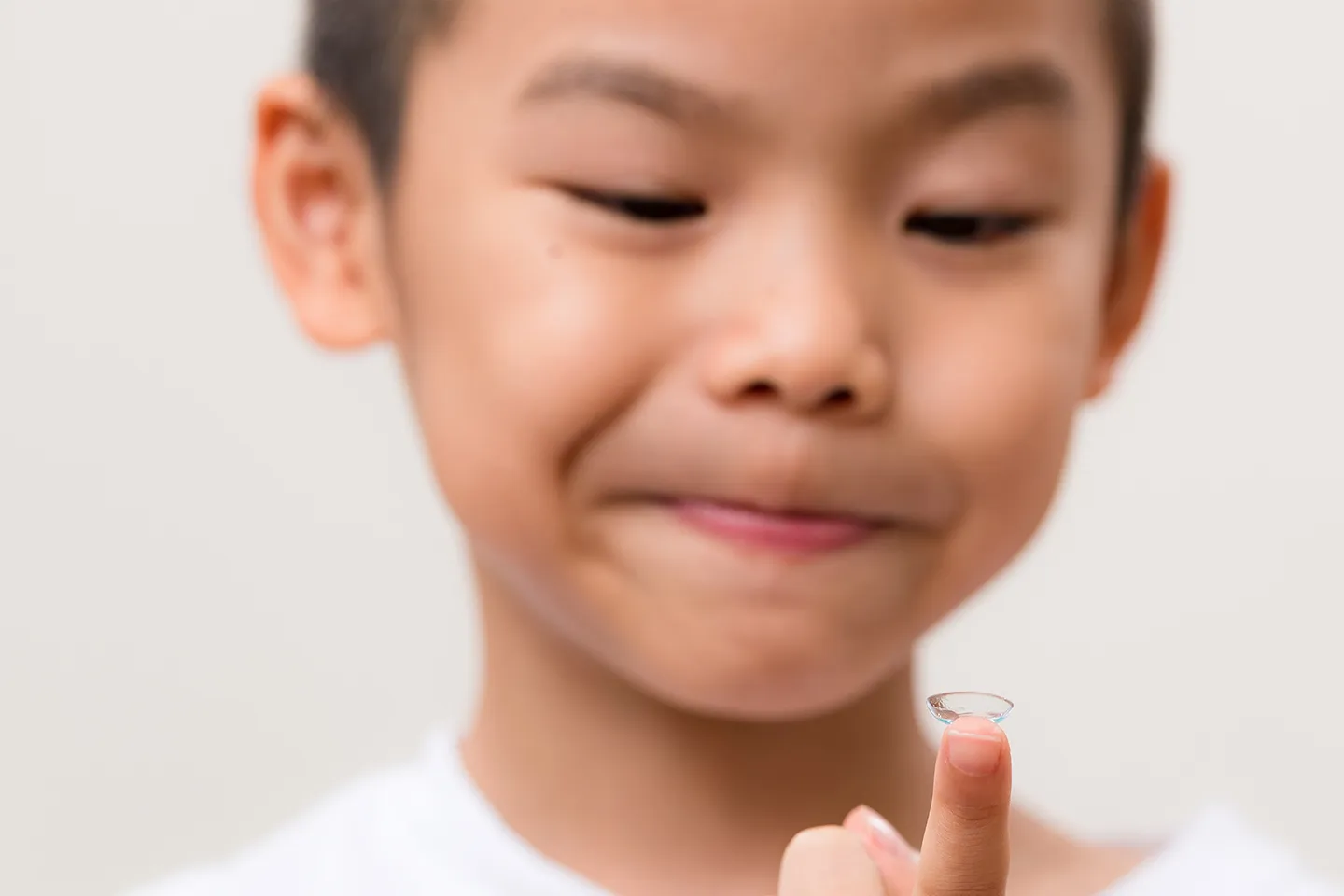
If you have kids in Singapore, you already know that our little red dot is often called the myopia capital of the world. From a young age, many children here are already reaching for their glasses to see the whiteboard or enjoy a movie. While spectacles are the traditional go-to, many parents eventually start asking if their children can switch to contact lenses. This usually happens when the kids get active in sports like swimming or football, or simply when they feel a bit self-conscious about thick frames. However, getting started with contacts is not as simple as just buying a box over the counter. It requires a specific, detailed contact lens exam.
At Eyesight.sg, we see many families wondering why their standard prescription isn't enough. The truth is that a regular eye examination and a contact lens assessment are two very different things. When it comes to children, especially those dealing with progressing myopia, this exam becomes even more critical. It is about more than just seeing clearly today; it is about protecting their eye health for the future.
What Exactly Happens During a Contact Lens Exam?
A standard eye exam measures your refractive error to determine your power for glasses. But since contact lenses sit directly on the eye rather than a few millimetres away on the bridge of the nose, the measurements must be incredibly precise. During a session at our clinics, we go through several specialized steps to ensure the lenses are safe and comfortable for your child.
The first step is often corneal topography. This sounds technical, but it is essentially creating a 3D map of the front surface of the eye. Every eye has a unique shape, much like a fingerprint. If a lens is too tight, it can starve the eye of oxygen. If it is too loose, it will slide around and irritate. For kids, ensuring a perfect fit is the best way to make sure they actually stay compliant with wearing them.
We also spend a significant amount of time evaluating the tear film. Contact lenses need a moist environment to float on. Since we spend so much time in air-conditioned classrooms and offices in Singapore, dry eyes are a common issue. We check if your child’s eyes produce enough quality tears to support lens wear throughout a long school day.
The Focus on Myopia Management for Children
In Singapore, we do not just look at contact lenses as a way to ditch glasses. We look at them as a tool for myopia management. If your child’s degree is jumping by 50 or 100 every single year, simply giving them stronger glasses does not solve the root problem. The eye is elongating, which can lead to higher risks of eye issues later in life.
Specialised contact lenses, such as orthokeratology (Ortho-K) or soft peripheral defocus lenses, are designed specifically to slow down this progression. During the exam, we talk to parents about these options. Unlike standard "off-the-shelf" contacts, these are medical devices used to manage how the eye grows. It is a proactive approach that fits right into the busy lifestyle of a Singaporean student.
Is Your Child Ready for Contact Lenses?
This is the question every parent asks. There is no "magic age" for contacts. Some ten-year-olds are more responsible than teenagers. During the exam, we observe how the child handles the idea of touching their eyes. Hygiene is the most important factor here. We look for signs that the child can follow a routine, such as washing their hands thoroughly and cleaning their lens case.
We also consider their lifestyle. If your child is a competitive swimmer or spends every weekend hiking at Bukit Timah, daily disposables might be the best recommendation to keep things hygienic and easy. The exam is as much a conversation about daily habits as it is about clinical measurements. Understanding the difference between contact lenses and eyeglasses helps in making this lifestyle choice.
The Fitting and Training Process
Once we have the measurements, we move to the trial fitting. This is where the "human" element really kicks in. We do not just hand over a pair of lenses and send you home. We sit down with the child and the parent to practice. We call it "I and E" training (Insertion and Ejection).
It can be a bit nerve-wracking for a child the first time they try to put something in their eye. Our team at Eyesight.sg takes a patient, gentle approach. We make sure they are 100% confident in putting them in and taking them out before they leave the clinic. We also teach them the "red eye" rule: if the eye looks red, feels itchy, or vision is blurry, the lens comes out immediately. You can read more about what to expect during an Ortho-K fitting to get a better idea of the process.
Frequently Asked Questions
Is a contact lens exam more expensive than a regular one?
Yes, it generally costs more because it involves extra tests like corneal mapping, tear film analysis, and the professional time needed for the fitting and follow-up sessions.
Can my child sleep in their contact lenses?
Only if they are specifically prescribed overnight Ortho-K lenses, which are designed to be worn only while sleeping. Standard soft lenses should never be worn overnight, as this significantly increases the risk of infection.
Are contact lenses safe for primary school kids?
Research shows that children as young as eight can safely wear contacts provided they have the right maturity level and proper supervision from parents regarding hygiene.
How often do we need to come back for checkups?
For myopia management, we usually recommend a follow-up every six months. This allows us to track the axial length of the eye and see if the management strategy is working effectively.
Will contact lenses stop my child's power from increasing?
While certain specialised lenses are designed to slow down the rate of increase, they do not "stop" or "cure" myopia. The goal is management and slowing the progression to keep the final prescription lower than it might have been otherwise.
Taking the Next Step for Your Child’s Vision
Managing your child’s eyesight in a high-pressure environment like Singapore requires more than just a reactive approach. By choosing a comprehensive contact lens exam, you are looking at the big picture of their long-term ocular health. Whether they need lenses for sports, confidence, or specifically to manage myopia progression, our team is here to guide you through every step with a professional yet personal touch.
If you noticed your child squinting at the TV or if their glasses prescription seems to be climbing every few months, it might be time to explore other options. We invite you to visit us at one of our clinic locations to discuss how we can help. Ready to see the difference a tailored approach makes? Book an appointment with Eyesight.sg today and let us help your child see the world more clearly.


Your Vision, Our Priority
At Eyesight.sg, we provide comprehensive eye care, from routine check-ups to advanced solutions. Our services are delivered by trusted optometrists across Singapore. Call us to schedule an appointment for your spectacles, contact lenses, or specialist lens needs. You can also drop by any time to explore our wide range of designer spectacle frames and sunglasses.

Why Choose Eyesight.sg?
- Experienced & Certified Optometrists
- Advanced Diagnostic Technology
- Personalised Care for All Ages
- Multiple Locations Across Singapore

Ready for Better Vision? We’re Here for You at Eyesight.sg.
West Mall Branch
Address: West Mall Shopping Centre, 1 Bukit Batok Central, #04-05, Singapore 658713
Phone: +65 6792 5733
Email: hello@eyesight.sg
Mon–Sun: 11am–9 pm
Tampines Branch
Address: 827 Tampines Street 81, #01-146, Singapore 520827
WhatsApp: +65 9824 1607
Email: hello@eyesight.sg
Mon–Sun: 11am–9 pm
Potong Pasir Branch
Address: 51 Upper Serangoon Rd, #01-07 The Poiz Centre, Singapore 347697
WhatsApp: +65 8809 5996
Email: hello@eyesight.sg
Mon–Sun: 11am–9 pm


© 2026 Eyesight.sg | All Rights Reserved | Privacy Policy | Digital Marketing by Remedo