

Inside a Life With Color Vision Deficiency
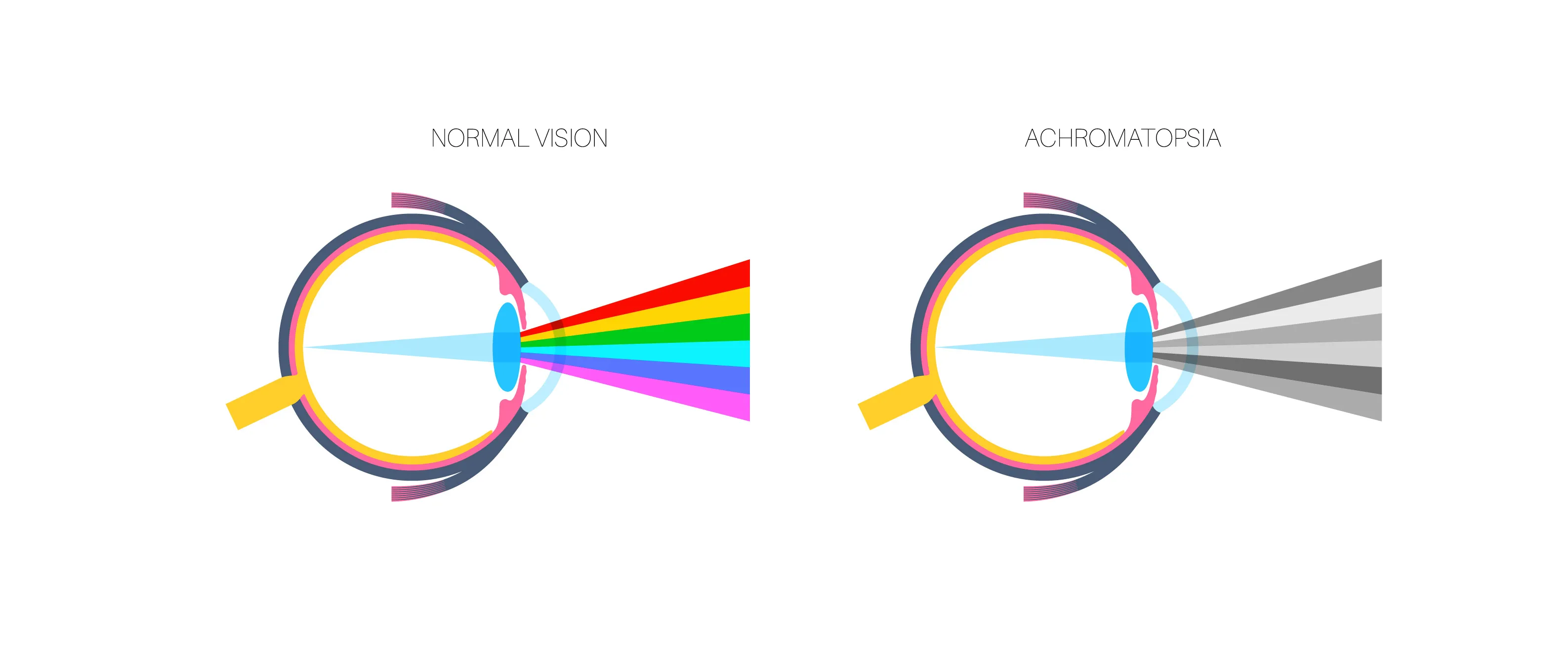
What’s it like to be color blind? Contrary to what the name implies, color blindness usually does not actually mean that you don’t see any color, but rather that you have difficulty perceiving or distinguishing between certain colors. This is why many prefer the term color vision deficiency or CVD to describe the condition. CVD affects men more than women, appearing in approximately 8% of men (1 in 12) and .5% of women (1 in 200) worldwide.
Having color vision deficiency means that you perceive color in a more limited way than those with normal color vision. This ranges from mild, in which you may not even be aware that you are experiencing color differently, to severe, which is perhaps the more appropriate from to be called "color blind" and involves the inability to see certain colors.
CVD can be inherited; it is caused by abnormalities in the genes that produce photopigments located in the cone cells in your eyes. The eyes contain different cone cells that fire in response to a specific color, blue, green, or red, and together allow you to see the depth and range of colors that the normal eye can see. The type of color blindness and, therefore, the type of color vision that is impaired, is based on which photopigments are abnormal. The most common form of CVD is red-green, followed by blue-yellow. Total color blindness, or the complete inability to perceive color, is quite rare. About 7% of males have congenital color blindness that they inherit from the mother's X chromosome.
Color blindness can also be the result of eye damage, specifically to the optic nerve, or to the area in the brain that processes color. Sometimes an eye disease, such as cataracts, can also impact one’s ability to perceive color. Systemic diseases such as diabetes or multiple sclerosis can also cause acquired CVD.
Living With CVD
Red-green color blindness does not mean only that you can’t tell the difference between red and green, but rather that any color that has some red or green (such as purple, orange, brown, pink, some shades of gray, etc) in it is affected.
You may not realize all of the ways you use even subtle distinctions in color in your daily life. Here are some examples of ways that CVD can impact your life and make seemingly everyday tasks challenging:
- You may not be able to cook meat to the desired temperature based on color.
- Most of the colors in a box of crayons will be indistinguishable.
- You may not be able to distinguish between red and green LED displays on electronic devices that indicate power on and off.
- You may not be able to tell between a ripe and unripe fruit or vegetables, such as bananas (green vs. yellow) or tomatoes (red vs green).
- Chocolate sauce, barbecue sauce, and ketchup may all look the same.
- Bright green vegetables can look unappealing as they appear greenish, brown or grey.
- You may not be able to distinguish color-coded pie charts or graphs (which can cause difficulty in school or work).
- Selecting an outfit that matches can be difficult.
Knowing that one is color blind is important for some occupations that require good color discrimination, such as police officers, railway workers, pilots, electricians, etc. These are just a few of the ways that CVD can impact one’s daily life. So is there a cure? Not yet.
While there is no cure for CVD, there is research being done into gene therapy, and in the meantime, there are corrective devices available, including color vision glasses (such as the Enchroma brand) and color filtering contacts that for some help to enhance color for some people. If you think you might have CVD, your optometrist can perform some tests to diagnose it or rule it out. If you have CVD, you can speak to your eye doctor about options that might be able to help you experience your world in full color.


Your Vision, Our Priority
At Eyesight.sg, we provide comprehensive eye care, from routine check-ups to advanced solutions. Our services are delivered by trusted optometrists across Singapore. Call us to schedule an appointment for your spectacles, contact lenses, or specialist lens needs. You can also drop by any time to explore our wide range of designer spectacle frames and sunglasses.

Why Choose Eyesight.sg?
- Experienced & Certified Optometrists
- Advanced Diagnostic Technology
- Personalised Care for All Ages
- Multiple Locations Across Singapore

Ready for Better Vision? We’re Here for You at Eyesight.sg.
West Mall Branch
Address: West Mall Shopping Centre, 1 Bukit Batok Central, #04-05, Singapore 658713
Phone: +65 6792 5733
Email: hello@eyesight.sg
Mon–Sun: 11am–9 pm
Tampines Branch
Address: 827 Tampines Street 81, #01-146, Singapore 520827
WhatsApp: +65 9824 1607
Email: hello@eyesight.sg
Mon–Sun: 11am–9 pm
Potong Pasir Branch
Address: 51 Upper Serangoon Rd, #01-07 The Poiz Centre, Singapore 347697
WhatsApp: +65 8809 5996
Email: hello@eyesight.sg
Mon–Sun: 11am–9 pm


© 2026 Eyesight.sg | All Rights Reserved | Privacy Policy | Digital Marketing by Remedo