
How Does High Myopia Affect Eye Health
You probably know that myopia, nearsightedness, causes faraway objects to appear blurry, but have you heard of “high myopia,” the most severe form of nearsightedness? Knowing what myopia is and how to slow or halt its progression before it accelerates can lower your child’s risk of developing sight-threatening eye diseases later in life.
At Eyesight.sg in Singapore, we offer myopia management to help preserve your child’s vision.
What Is High Myopia?
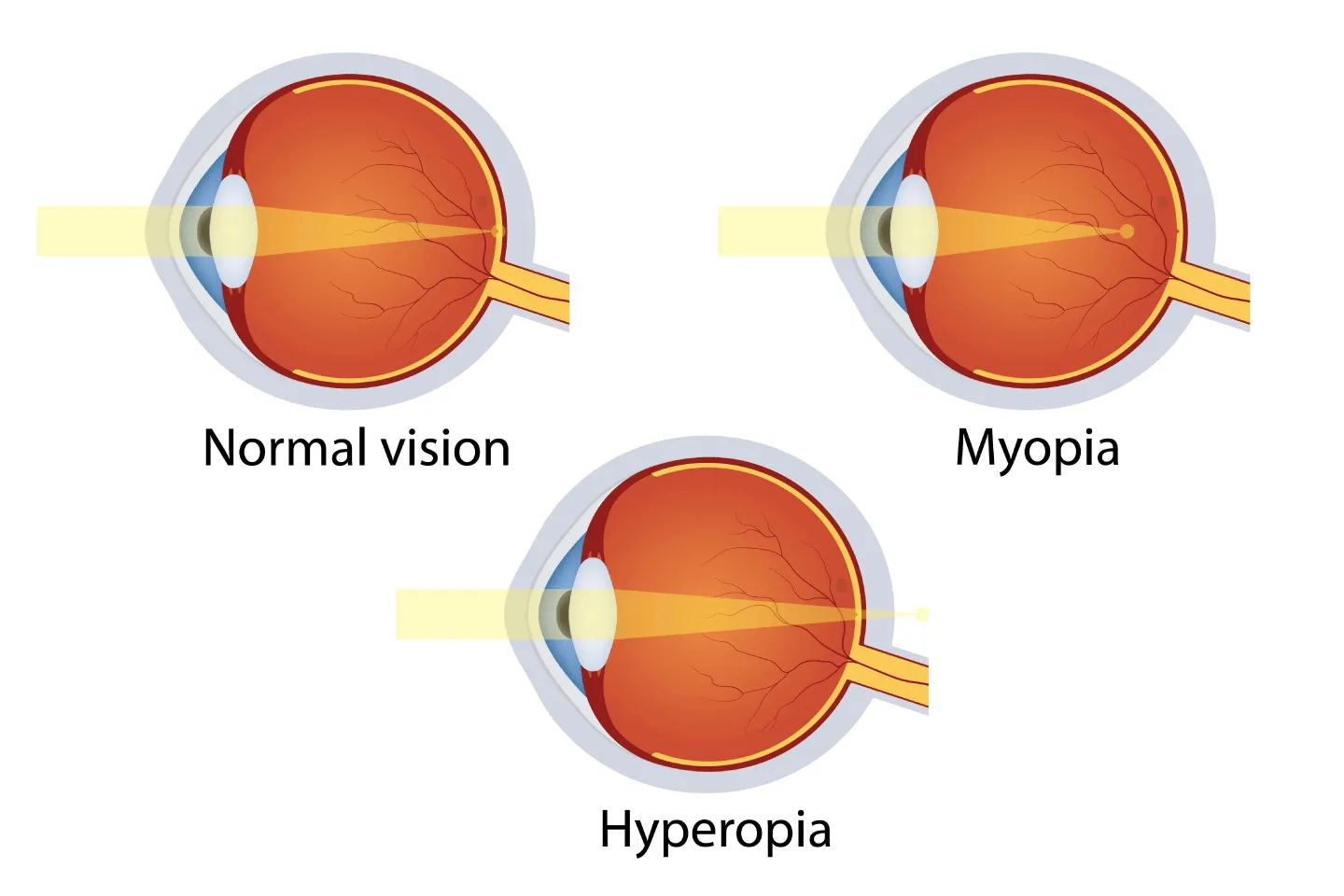
Myopia, or nearsightedness (where distant objects appear blurry), occurs when the eye grows too long from front to back (axial elongation), causing light entering the eye to focus in front of the retina instead of directly on it. This leads to blurry distance vision. In some cases, the curvature of the cornea, the clear outer layer of the eye, can also contribute, but the primary cause, especially for high myopia, is the elongation of the eyeball.
High myopia is a severe form of myopia, usually defined as a refractive error of -6.00 diopters or higher. Children with moderate myopia, from around -3.00 diopters, are also at increased risk of developing serious eye conditions later in life. Both genetic and environmental factors, such as a family history of myopia, prolonged near work, and limited time outdoors, can contribute to its development.
In contrast, regular myopia is generally less severe and arises from a combination of hereditary and lifestyle factors.
Will Myopia Always Get Worse?
Myopia often progresses in childhood, and even more so when there's a family history of nearsightedness. Given the risks associated with myopia, it’s important to schedule regular eye exams for children with myopia to detect any worsening of the condition.
Regular myopia tends to progress, especially between the ages of 7 and 18, when most kids and teens experience growth spurts. The eye grows as the body grows, so the irregular curvature of the cornea becomes more pronounced.
In 50% of all myopia cases, progression stops at around 15 years of age. However, with high myopia, the condition continues to progress until around the age of 24, and sometimes later.
High Myopia And Its Risks
High myopia can dramatically raise a child’s risk of developing the following eye conditions in adulthood:
- Cataracts - cloudy formations on the eye (4.5x increased risk)
- Glaucoma - optic nerve damage caused by increased pressure inside the eye (3x increased risk)
- Retinal detachment - displacement of the retina from its support tissue (12x increased risk)
- Myopic macular degeneration - damage to the macula, the central part of the retina (845x increased risk)
- Pathological myopia - worsening of high myopia to the point of vision loss
All of these eye conditions can cause vision loss and may require eye surgery. Therefore, it’s essential to monitor your child’s myopia with regular comprehensive eye exams and to learn the various ways we can manage your child’s myopia.
How Myopia Management Can Help
While myopia is worrisome, there is good news: an optometrist-designed program of myopia management can slow the progression of myopia by up to 78%, and can often halt it.
The sooner a child starts a myopia management program, the better. Treating a child’s myopia in its early stages is the best way to ensure that it won’t progress to high myopia.
If you’re interested in myopia management for your child, contact us at Eyesight.sg in Singapore and schedule a comprehensive eye exam. We will determine which type of myopia management program is right for your child based on the severity of their myopia, age, and other factors.
Find out how myopia management can slow myopia progression and preserve your child’s eye health and vision for years to come.
Frequently Asked Questions With Our Optometrists
At what age can my child start myopia management?
Growth spurts can aggravate the elongation of the cornea. Therefore, myopia management can be very effective for children as young as 7-8 years old.
Will Myopia Cause Blindness?
Myopia itself doesn’t cause blindness, but it greatly increases the risk of developing eye diseases that can cause vision loss. Myopia management, which can slow myopia progression, can reduce the risk of these sight-robbing conditions and can guard your child’s vision for the future.


Your Vision, Our Priority
At Eyesight.sg, we provide comprehensive eye care, from routine check-ups to advanced solutions. Our services are delivered by trusted optometrists across Singapore. Call us to schedule an appointment for your spectacles, contact lenses, or specialist lens needs. You can also drop by any time to explore our wide range of designer spectacle frames and sunglasses.

Why Choose Eyesight.sg?
- Experienced & Certified Optometrists
- Advanced Diagnostic Technology
- Personalised Care for All Ages
- Multiple Locations Across Singapore

Ready for Better Vision? We’re Here for You at Eyesight.sg.
West Mall Branch
Address: West Mall Shopping Centre, 1 Bukit Batok Central, #04-05, Singapore 658713
Phone: +65 6792 5733
Email: hello@eyesight.sg
Mon–Sun: 11am–9 pm
Tampines Branch
Address: 827 Tampines Street 81, #01-146, Singapore 520827
WhatsApp: +65 9824 1607
Email: hello@eyesight.sg
Mon–Sun: 11am–9 pm
Potong Pasir Branch
Address: 51 Upper Serangoon Rd, #01-07 The Poiz Centre, Singapore 347697
WhatsApp: +65 8809 5996
Email: hello@eyesight.sg
Mon–Sun: 11am–9 pm


© 2026 Eyesight.sg | All Rights Reserved | Privacy Policy | Digital Marketing by Remedo