

Childhood Myopia Is in Crisis Mode on a Global Scale
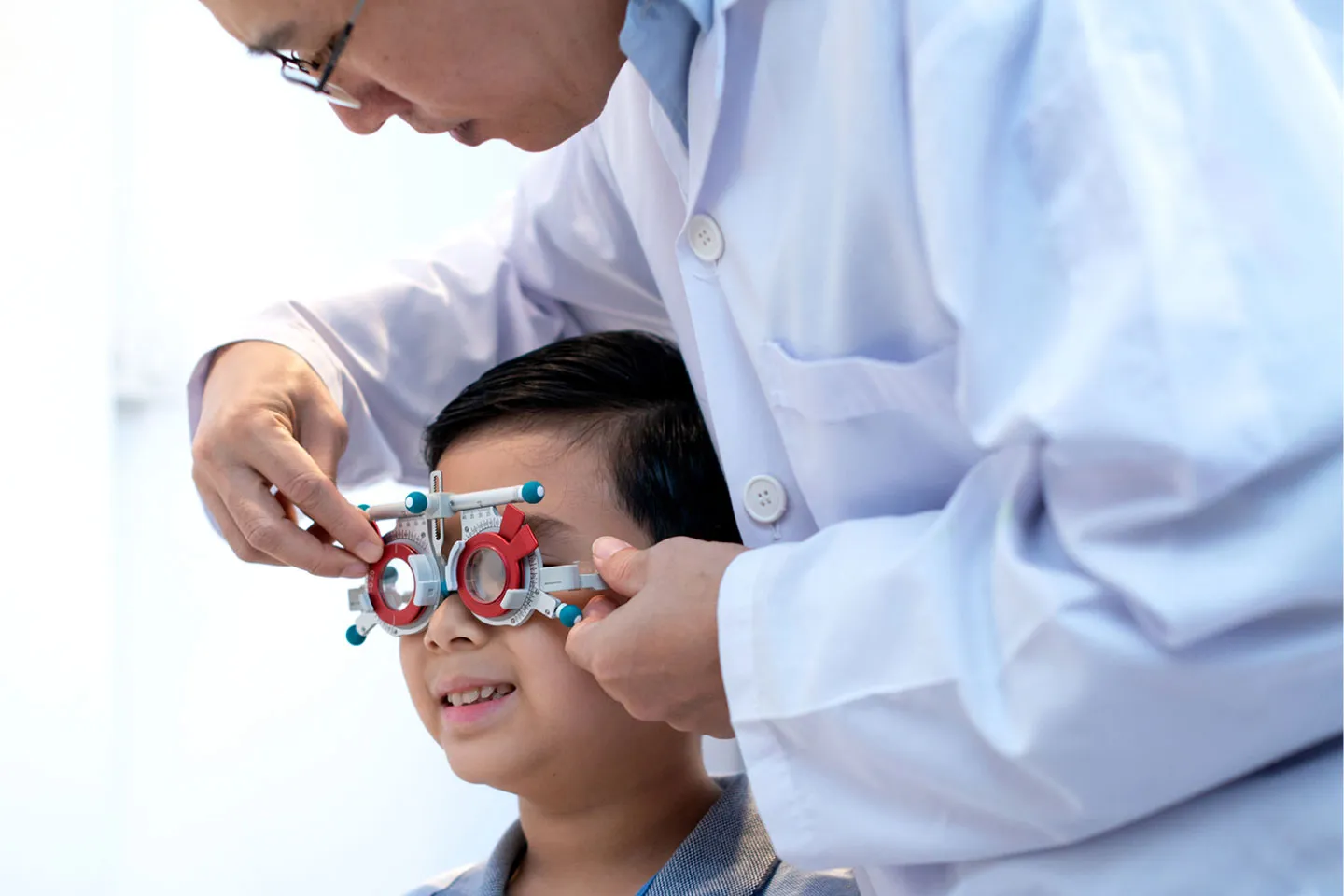
When it comes to the prevalence of myopia (nearsightedness), the statistics are staggering. By 2050, nearly half of the world’s population, about 5 billion people, will be myopic. Below are a few useful tips to help you prevent your child from being part of that statistic.
What Is Myopia?
Myopia occurs when the eye elongates, causing light rays to focus in front of the light-sensitive retina rather than directly on it, while looking at something far away. So, people with nearsightedness perceive distant objects as blurred, while close-up objects can remain clear.
Myopia tends to develop during childhood, when the eyeballs rapidly grow (along with the rest of the body), mainly between the ages of and 8-18. It can worsen slowly or quickly, but it is not simply an inconvenience. People with progressive myopia are more likely to develop serious eye diseases like cataracts, retinal detachment, macular degeneration, and glaucoma later in life—conditions which may lead to permanent loss of vision and even blindness.
How To Know Whether Your Child Is Myopic
Below are some telltale signs to watch for:
- Blurred distance vision - Objects in the distance are blurred; kids may complain that they can't see the board
- Headaches - When myopia isn't corrected, it can cause eye strain and headaches.
- Head tilting or squinting - If your child squints or tilts his or her head while watching TV, for example, it may be a symptom of myopia.
- Looking at objects too closely - If you notice your child moving closer to the TV or squinting as they try to see the writing on the board, it may indicate myopia.
What Parents Can Do To Slow Their Child’s Myopia Progression
- Encourage your child to go outdoors for at least 90 minutes a day, preferably in the sunshine. Studies show that playing outdoors reduces the risk of developing myopia and slows its progression.
- Limit the amount of time your child spends staring at a screen, reading, and doing close work such as homework.
- When your child uses a digital screen, make sure that it isn’t too close to the face.
- Teach the 20-20-20 rule: During screen time, take a break every 20 minutes to look at an object across the room or out the window about 20 feet away, for at least 20 seconds.
How We Can Help
Certain eye doctors offer treatment methods known as myopia control or myopia management. These include orthokeratology, bifocal or multifocal contact lenses, and eye drops like low-dose atropine. Regular eyeglasses and contact lenses don't prevent its progression, but do correct myopia so the child can see and function normally.
If your child shows signs of myopia, schedule an eye exam with Eyesight.sg in Singapore as soon as possible.
Q&A
How is myopia diagnosed?
Your child's eye doctor will perform a thorough paediatric eye exam to diagnose myopia, which often includes a visual acuity test, where the eye doctor will use an eye chart made up of letters of varied sizes. If the test results indicate myopia, then the optometrist may shine a light into their eyes and evaluate the reflection off the retina to determine the degree of refractive error for their prescription.
Can myopia lead to blindness?
High myopia may increase your child's risk of developing more serious eye conditions later in life, such as cataracts, retinal detachment, and glaucoma. Left untreated, high myopia complications can sometimes lead to blindness, which is why routine eye exams are critical.


Your Vision, Our Priority
At Eyesight.sg, we provide comprehensive eye care, from routine check-ups to advanced solutions. Our services are delivered by trusted optometrists across Singapore. Call us to schedule an appointment for your spectacles, contact lenses, or specialist lens needs. You can also drop by any time to explore our wide range of designer spectacle frames and sunglasses.

Why Choose Eyesight.sg?
- Experienced & Certified Optometrists
- Advanced Diagnostic Technology
- Personalised Care for All Ages
- Multiple Locations Across Singapore

Ready for Better Vision? We’re Here for You at Eyesight.sg.
West Mall Branch
Address: West Mall Shopping Centre, 1 Bukit Batok Central, #04-05, Singapore 658713
Phone: +65 6792 5733
Email: hello@eyesight.sg
Mon–Sun: 11am–9 pm
Tampines Branch
Address: 827 Tampines Street 81, #01-146, Singapore 520827
WhatsApp: +65 9824 1607
Email: hello@eyesight.sg
Mon–Sun: 11am–9 pm
Potong Pasir Branch
Address: 51 Upper Serangoon Rd, #01-07 The Poiz Centre, Singapore 347697
WhatsApp: +65 8809 5996
Email: hello@eyesight.sg
Mon–Sun: 11am–9 pm


© 2026 Eyesight.sg | All Rights Reserved | Privacy Policy | Digital Marketing by Remedo