

What Is the Role of an Optometrist in Managing Cataracts?
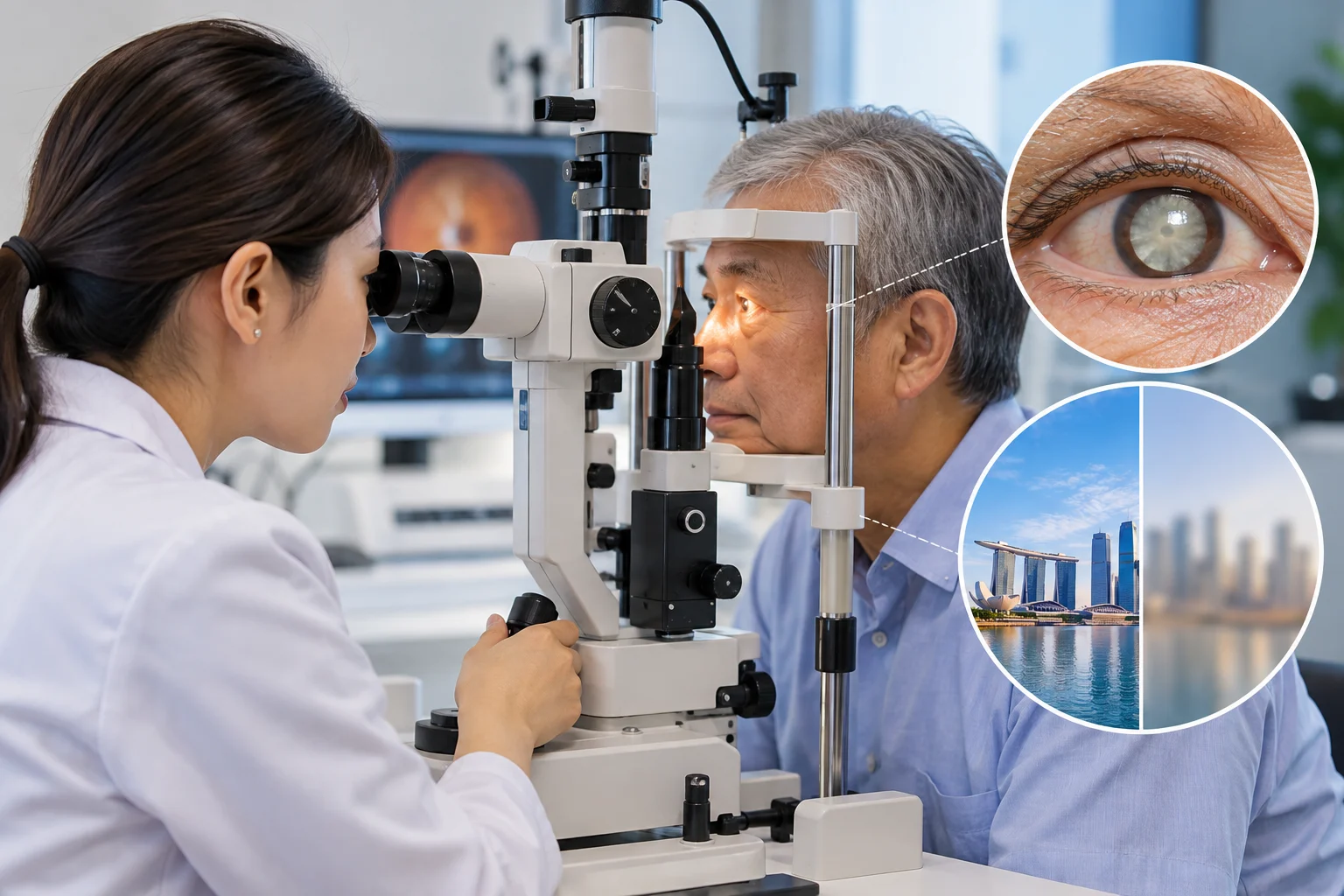
Have you noticed that your vision has become cloudy, lights appear more glaring than before, or you are finding it harder to see clearly at night? These changes can sometimes be associated with cataracts.
A cataract occurs when the natural lens inside the eye becomes cloudy. Cataracts are commonly associated with ageing, although they can develop for other reasons as well. They may progress gradually, meaning that some people do not notice significant changes in their vision initially.
An optometrist plays an important role in detecting cataracts, assessing their effect on vision, monitoring changes over time, and identifying when specialist assessment may be appropriate. While optometrists do not perform cataract surgery, regular eye examinations can help determine when further ophthalmic assessment may be needed.
What Is a Cataract?
A cataract develops when the natural lens of the eye becomes cloudy or less transparent.
The lens sits behind the iris and pupil and helps focus light onto the retina. When the lens becomes cloudy, light may not pass through it as clearly as it normally would. This can gradually affect the quality of vision.
Common symptoms of cataracts may include:
- Blurred or cloudy vision
- Increased sensitivity to bright lights
- Glare around headlights or other lights
- Difficulty seeing at night
- Faded or less vivid colours
- Frequent changes in glasses prescription
- Difficulty reading or performing detailed visual tasks
Cataracts usually develop gradually, so the symptoms may not always be obvious at first.
What Is the Role of an Optometrist in Cataract Management?
An optometrist can be involved at several stages of cataract care.
Their role may include detecting cataract changes, assessing how they affect your vision, monitoring progression, providing appropriate vision correction, and determining whether referral for specialist assessment may be appropriate.
This means that seeing an optometrist is not only useful after a cataract has already been diagnosed. Regular eye examinations can also help identify lens changes that you may not have noticed yourself.
How Does an Optometrist Detect Cataracts?
During a comprehensive eye examination, an optometrist can examine different structures of the eye, including the lens.
The examination may include:
- Visual acuity testing
- Refraction and prescription assessment
- Examination of the front of the eye
- Assessment of the lens
- Eye pressure measurement where appropriate
- Retinal examination
- Retinal imaging where appropriate
A comprehensive eye examination allows an optometrist to assess both your vision and overall eye health.
If lens changes are identified, the optometrist can discuss the findings with you and explain whether monitoring or further assessment may be appropriate.
Can an Optometrist Diagnose a Cataract?
An optometrist can identify and assess cataract changes during an eye examination.
However, the role of an optometrist extends beyond simply identifying a cloudy lens. They also assess how the cataract is affecting your vision and whether there are other eye health concerns that need attention.
If the cataract is mild and is not significantly affecting your daily activities, regular monitoring may be appropriate.
If the cataract is significantly affecting your vision or daily life, an ophthalmology referral may be recommended to discuss whether cataract surgery should be considered.
Can Cataracts Affect Your Glasses Prescription?
Yes. Cataracts can sometimes be associated with changes in refraction.
You may notice that your existing glasses no longer provide the same level of clarity, or you may require prescription changes more frequently than before.
An optometrist can assess your current prescription and determine whether updated glasses may improve your vision.
However, changing your glasses does not remove the cataract itself. If the cataract continues to progress and begins to significantly affect your vision, specialist assessment may become appropriate.
How Does an Optometrist Monitor Cataracts?
Not every cataract requires immediate surgery.
If a cataract is mild and vision remains adequate for your daily activities, an optometrist may recommend monitoring it during regular eye examinations.
During follow-up appointments, your optometrist may assess:
- Changes in visual acuity
- Changes in your prescription
- Progression of lens opacity
- Glare or light sensitivity
- Changes in contrast or visual quality
- Difficulties with reading, driving, or other activities
- Overall eye health
Regular monitoring can help identify when the cataract begins to have a greater impact on your quality of vision.
Can Glasses Treat Cataracts?
Glasses cannot remove or reverse a cataract.
However, if the cataract is still at an earlier stage, an updated prescription may help improve visual clarity.
An optometrist can determine whether a change in prescription is likely to provide useful visual improvement.
As the cataract progresses, however, changing glasses may eventually provide limited benefit. At that stage, an ophthalmologist can assess whether cataract surgery may be appropriate.
When Does an Optometrist Refer a Patient for Cataract Surgery?
The need for cataract surgery is not determined simply by how cloudy the lens appears.
An important consideration is how much the cataract affects the person's vision and daily activities.
An optometrist may recommend a referral for an ophthalmology assessment when a cataract is associated with:
- Increasingly blurred vision
- Difficulty reading
- Difficulty driving, particularly at night
- Significant glare
- Difficulty recognising faces
- Reduced ability to perform work or hobbies
- A noticeable decline in visual quality
- Limited improvement from updated glasses
The ophthalmologist can then assess the cataract and discuss whether surgery is appropriate.
Does Everyone With a Cataract Need Surgery?
No.
Cataracts can develop gradually, and an early cataract may not significantly interfere with a person's everyday activities.
If vision remains functional, monitoring and appropriate vision correction may be sufficient for a period of time.
Cataract surgery is considered when the cataract causes enough visual impairment to interfere with a person's daily life and the ophthalmologist determines that surgery is appropriate.
Therefore, being told that you have an early cataract does not necessarily mean that you need surgery immediately.
What Happens When an Optometrist Refers You to an Ophthalmologist?
If your optometrist identifies a cataract that may require specialist assessment, you may be referred to an ophthalmologist.
The ophthalmologist can perform a more detailed medical assessment and determine whether cataract surgery or another form of treatment is appropriate.
The optometrist and ophthalmologist can therefore have complementary roles in your eye care.
The optometrist may identify and monitor the cataract, while the ophthalmologist manages the surgical aspects when required.
Can an Optometrist Detect Other Eye Problems Alongside Cataracts?
Yes.
A comprehensive eye examination is not limited to checking for cataracts.
An optometrist may also assess other aspects of eye health, including the retina, optic nerve, cornea, and eye pressure.
This is important because changes in vision should not automatically be attributed to cataracts. Blurred or reduced vision can have several possible causes.
Eyesight.sg offers retinal imaging as part of comprehensive eye examination services where appropriate. This can help provide additional information about the health of the back of the eye.
What Are the Early Symptoms of Cataracts?
Cataracts can initially cause subtle changes that may be easy to overlook.
You may notice:
- Slightly blurred vision
- Increased glare
- Difficulty seeing in low light
- Colours appearing less vivid
- Needing brighter lighting to read
- More difficulty seeing road signs
- Changes in your glasses prescription
Because these symptoms can also occur with other eye conditions, an eye examination is useful if they persist or become noticeable.
Can Children Develop Cataracts?
Yes, although cataracts are more commonly associated with older adults.
Cataracts can occasionally occur in children and may be present from birth or develop later.
Any unusual change in a child's vision should be assessed by an appropriate eye care professional. Early identification can be particularly important because vision develops during childhood.
Regular children's eye examinations can help monitor visual development and identify changes that may require further assessment.
How Often Should You Have Your Eyes Checked?
There is no single examination schedule that is appropriate for everyone.
The recommended frequency can depend on factors such as:
- Age
- Existing eye conditions
- Family history
- General health
- Current vision
- Use of glasses or contact lenses
- Previous eye problems
If you have already been identified as having cataract changes, your optometrist can recommend an appropriate follow-up schedule based on your individual circumstances.
When Should You Have Your Eyes Examined?
You should consider arranging an eye examination if you notice a change in your vision, even if the change seems gradual.
In particular, arrange an assessment if you experience:
- Increasingly blurred vision
- Difficulty seeing at night
- Glare from lights
- Difficulty reading
- Frequent prescription changes
- Colours appearing less vivid
- Reduced visual clarity
- Difficulty with everyday activities because of your vision
What Is the Difference Between Cataract Monitoring and Cataract Surgery?
Cataract monitoring involves regularly assessing the lens, vision, and overall eye health to determine whether the cataract is changing.
Cataract surgery, on the other hand, involves removing the cloudy natural lens and replacing it with an artificial intraocular lens.
Optometrists can play an important role in detecting and monitoring cataracts, but cataract surgery is performed by an ophthalmologist.
The decision to proceed with surgery is based on the effect of the cataract on vision and daily activities, along with the ophthalmologist's assessment.
Understanding the Optometrist's Role in Cataract Care
An optometrist plays an important role in the ongoing care of patients with cataracts.
They can identify cataract changes during an eye examination, assess how the cataract affects vision, monitor changes over time, provide appropriate vision correction, and recognise when specialist ophthalmology assessment may be appropriate.
Not every cataract requires immediate surgery. In the earlier stages, monitoring and updated glasses may help maintain useful vision. When a cataract begins to significantly interfere with everyday activities, referral to an ophthalmologist can help determine whether surgical treatment should be considered.
At Eyesight.sg, our optometrists provide comprehensive eye examinations for children and adults, including vision assessment and eye health checks.
If you have noticed changes in your vision or are concerned about cataracts, book an eye examination with Eyesight.sg to have your vision and eye health assessed.
Frequently Asked Questions on Role of an Optometrist in Managing Cataracts
Q1. Can an optometrist detect cataracts?
A: Yes. An optometrist can examine the lens during a comprehensive eye examination and identify changes that may be consistent with cataracts. They can also assess how the cataract is affecting your vision.
Q2. Can an optometrist treat cataracts?
A: An optometrist can help monitor cataracts and manage vision changes, such as assessing whether an updated glasses prescription may help. However, cataract removal requires surgery performed by an ophthalmologist.
Q3. Does everyone with a cataract need surgery?
A: No. Early cataracts may not significantly affect vision or daily activities and can often be monitored. Surgery may be considered when the cataract causes significant visual difficulties.
Q4. Can new glasses improve cataract vision?
A: An updated glasses prescription may improve vision when a cataract is in its earlier stages and a refractive change is contributing to blurred vision. However, glasses cannot remove or reverse the cataract.
Q5. When will an optometrist refer me to an ophthalmologist for cataracts?
A: Referral may be recommended when the cataract significantly affects vision or daily activities, when vision cannot be adequately improved with glasses, or when further specialist assessment is required.
Q6. Can an optometrist monitor cataracts?
A: Yes. Regular eye examinations can allow an optometrist to monitor changes in vision and the appearance of the lens over time and advise when further assessment may be appropriate.
Q7. Can cataracts cause night vision problems?
A: Yes. Cataracts can cause glare and difficulty seeing clearly in low-light conditions. If night vision has become more difficult, an eye examination can help identify the possible cause.
Q8. Can cataracts occur in children?
A: Yes. Although cataracts are more commonly associated with ageing, they can also occur in children. Any unexplained change in a child's vision should be assessed by an appropriate eye care professional.


Your Vision, Our Priority
At Eyesight.sg, we provide comprehensive eye care, from routine check-ups to advanced solutions. Our services are delivered by trusted optometrists across Singapore. Call us to schedule an appointment for your spectacles, contact lenses, or specialist lens needs. You can also drop by any time to explore our wide range of designer spectacle frames and sunglasses.

Why Choose Eyesight.sg?
- Experienced & Certified Optometrists
- Advanced Diagnostic Technology
- Personalised Care for All Ages
- Multiple Locations Across Singapore

Ready for Better Vision? We’re Here for You at Eyesight.sg.
West Mall Branch
Address: West Mall Shopping Centre, 1 Bukit Batok Central, #04-05, Singapore 658713
Phone: +65 6792 5733
Email: hello@eyesight.sg
Mon–Sun: 11am–9 pm
Tampines Branch
Address: 827 Tampines Street 81, #01-146, Singapore 520827
WhatsApp: +65 9824 1607
Email: hello@eyesight.sg
Mon–Sun: 11am–9 pm
Potong Pasir Branch
Address: 51 Upper Serangoon Rd, #01-07 The Poiz Centre, Singapore 347697
WhatsApp: +65 8809 5996
Email: hello@eyesight.sg
Mon–Sun: 11am–9 pm


© 2026 Eyesight.sg | All Rights Reserved | Privacy Policy | Digital Marketing by Remedo