
Can an Optometrist Diagnose All Eye Problems?
When you notice blurred vision, eye strain, headaches, floaters, or another change in your eyes, you may wonder whether you should see an optometrist or an ophthalmologist.
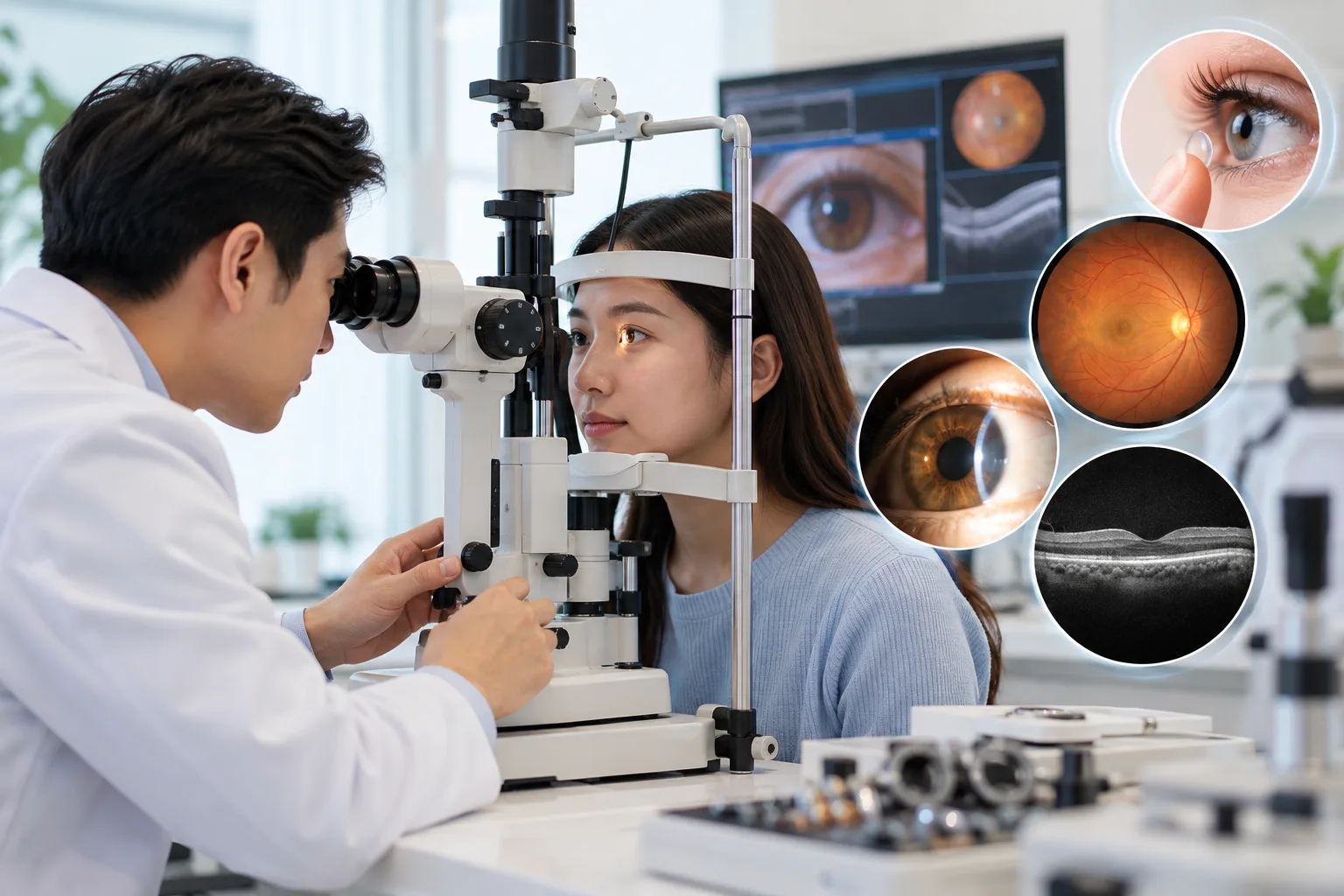
Optometrists are trained to assess vision, perform comprehensive eye examinations, identify many eye conditions, and provide advice or treatment for a range of eye health concerns. However, they do not diagnose or manage every possible eye problem.
Some eye conditions require specialist assessment by an ophthalmologist, particularly when surgery, complex medical treatment, or management of advanced eye disease is needed.
What Does an Optometrist Do?
An optometrist is an eye care professional trained to assess vision and examine the health of the eyes.
During an eye examination, an optometrist may check your:
- Visual acuity
- Eye prescription
- Eye movements and coordination
- Eye pressure
- Cornea and other structures at the front of the eye
- Retina and optic nerve
- Binocular vision
- Colour vision
- Overall visual function
A comprehensive eye examination can include a combination of different assessments depending on your age, symptoms, medical history, and visual needs.
An optometrist may also identify signs that could indicate an eye condition requiring further assessment.
Can an Optometrist Diagnose Eye Problems?
Yes, optometrists can identify and manage many common vision and eye health problems.
For example, an optometrist can assess issues such as:
- Short-sightedness
- Long-sightedness
- Astigmatism
- Presbyopia
- Eye strain
- Dry eye symptoms
- Certain binocular vision problems
- Colour vision deficiency
- Some signs associated with retinal or optic nerve conditions
- Changes in eye pressure that may require further investigation
However, not every eye condition can be fully diagnosed or managed by an optometrist alone.
If an examination reveals findings that require medical or surgical treatment, you may be referred to an ophthalmologist or another appropriate healthcare professional.
What Is the Difference Between an Optometrist and an Ophthalmologist?
Optometrists and ophthalmologists are both involved in eye care, but their roles and training are different.
Optometrist
An optometrist primarily focuses on vision and eye health assessment. Depending on the individual's needs, an optometrist can:
- Conduct eye examinations
- Assess refractive errors
- Prescribe or advise on vision correction
- Assess certain eye health concerns
- Provide contact lens examinations and fitting
- Monitor certain eye conditions
- Identify signs that may require specialist referral
For example, Eyesight.sg provides contact lens examinations to assess whether contact lenses are suitable and determine appropriate lens requirements.
Ophthalmologist
An ophthalmologist is a medical doctor who specialises in eye diseases and their medical and surgical management.
Ophthalmologists can diagnose and treat complex eye conditions and perform eye surgery when required.
Depending on the condition, an ophthalmologist may manage problems involving the retina, cornea, glaucoma, cataracts, or other parts of the eye.
This means that optometrists and ophthalmologists often work together rather than being alternatives to one another.
What Eye Problems Can an Optometrist Identify?
A comprehensive eye examination can provide useful information about both your vision and eye health.
1. Refractive Errors
Refractive errors are among the most common reasons people visit an optometrist.
They include:
- Myopia or short-sightedness
- Hyperopia or long-sightedness
- Astigmatism
- Presbyopia
These conditions occur when light does not focus correctly on the retina, resulting in blurred vision.
An optometrist can assess your vision and determine whether you may benefit from glasses or contact lenses.
2. Dry Eye Symptoms
Dry, gritty, burning, watery, or uncomfortable eyes can have several possible causes.
An optometrist can assess your symptoms and examine the eye surface to look for signs that may be associated with dry eye.
Depending on the findings, you may receive advice about eye care, environmental factors, screen habits, contact lens use, or other measures.
Persistent or severe symptoms may require further medical assessment.
3. Myopia in Children
Optometrists also play an important role in monitoring children's vision.
Myopia, or short-sightedness, commonly develops during childhood and may progress as the child grows.
Regular children's eye examinations can help detect changes in vision and monitor eye health.
Eyesight.sg provides myopia management to help assess and monitor children's myopia and discuss appropriate management options.
4. Colour Vision Deficiency
Difficulty distinguishing certain colours may be identified through colour vision testing.
An optometrist can perform appropriate tests to assess colour vision and determine whether a person has a colour vision deficiency.
This may be particularly relevant for children, students, or individuals whose work requires accurate colour identification.
Eyesight.sg provides colour vision testing as part of its eye care services.
5. Signs of Eye Disease
An eye examination may sometimes reveal signs that could be associated with an underlying eye condition.
For example, an optometrist may notice abnormalities involving the retina, optic nerve, cornea, or other structures of the eye.
Importantly, identifying a possible abnormality is not always the same as providing a final diagnosis.
If further investigation is needed, your optometrist may recommend additional testing or referral to an ophthalmologist.
Can an Optometrist Diagnose Glaucoma?
An optometrist can assess the eyes for signs and risk factors associated with glaucoma.
An examination may include an eye pressure assessment, examination of the optic nerve, and other tests where appropriate.
However, glaucoma can be complex, and additional investigations may be required before a diagnosis is confirmed.
If your examination raises concerns about glaucoma or another condition affecting the optic nerve, you may be advised to undergo further assessment.
Can an Optometrist Diagnose Cataracts?
An optometrist can identify changes in the lens that may be consistent with cataracts during an eye examination.
Cataracts occur when the natural lens of the eye becomes cloudy. They can cause symptoms such as:
- Blurred vision
- Glare around lights
- Difficulty seeing at night
- Faded or less vivid colours
- Increasing difficulty with everyday visual tasks
If cataract changes are identified, your optometrist can discuss the findings with you and advise whether further assessment is appropriate.
When cataracts significantly affect vision and require surgical treatment, an ophthalmologist is responsible for assessing and managing the surgical aspect of care.
Can an Optometrist Diagnose Retinal Problems?
Optometrists can examine the retina and may use retinal imaging as part of an eye examination.
Retinal imaging can provide detailed images of the back of the eye and may help an eye care professional identify changes that require further assessment.
Eyesight.sg includes retinal imaging among the assessments available where appropriate.
However, not every retinal condition can be diagnosed or managed by an optometrist alone. If an examination reveals a concerning retinal finding, referral to an ophthalmologist or retinal specialist may be recommended.
Can an Optometrist Diagnose Eye Infections?
Some eye infections and inflammatory conditions can cause symptoms such as redness, discharge, irritation, pain, or light sensitivity.
An optometrist can assess the eye and consider whether the symptoms may be consistent with a particular eye problem.
However, eye redness does not always have the same cause.
For example, irritation, allergy, dry eye, infection, inflammation, injury, or other conditions can all result in a red eye.
If symptoms are severe, persistent, unusual, or associated with vision changes, further medical assessment may be required.
When Would an Optometrist Refer You to an Ophthalmologist?
Referral may be recommended when an examination identifies a problem that requires specialist medical or surgical assessment.
This may include situations involving:
- Significant or unexplained changes in vision
- Suspected glaucoma
- Concerning retinal findings
- Certain corneal conditions
- Advanced eye disease
- Significant eye injuries
- Conditions requiring surgery
- Complex or unexplained eye symptoms
- Findings that require additional diagnostic testing
Referral does not necessarily mean that you have a serious eye disease. It simply means that the findings may require a level of assessment or treatment outside the optometrist's role.
Does a Normal Eye Test Mean You Have No Eye Problems?
Not necessarily.
A normal examination is reassuring, but some eye diseases can develop gradually and may not cause noticeable symptoms during their early stages.
Some people may also adapt to gradual changes in their vision without realising that their eyesight has changed.
Regular eye examinations can therefore be useful even when you feel that your vision is normal.
The frequency of examinations depends on factors such as your age, visual needs, eye health, medical history, family history, and any existing eye conditions.
When Should You See an Optometrist?
Consider arranging an eye examination if you notice:
- Blurred or changing vision
- Difficulty seeing at night
- Frequent headaches associated with visual tasks
- Eye strain
- Difficulty focusing
- Increasing sensitivity to light
- Problems with reading or computer work
- Difficulty distinguishing colours
- Changes in your glasses prescription
- New or persistent visual symptoms
Children should also have their vision assessed when there are concerns about reading, learning, eye coordination, or changes in eyesight.
If you wear contact lenses, regular examinations can also help assess your vision, eye health, and contact lens requirements.
When Should You Seek Urgent Eye Care?
Some eye symptoms require prompt assessment rather than waiting for a routine appointment.
Seek urgent eye care if you experience symptoms such as:
- Sudden loss or significant reduction of vision
- Sudden onset of many floaters or flashes
- A curtain or shadow appearing across your vision
- Severe eye pain
- Significant redness with pain or vision changes
- Sudden double vision
- A serious eye injury
- Sudden changes in the appearance of the eye
These symptoms can sometimes be associated with conditions requiring urgent assessment.
If you experience a sudden or severe change in your vision, seek appropriate urgent medical attention rather than waiting for a routine eye examination.
Can an Optometrist Treat Eye Problems?
The type of care an optometrist can provide depends on the condition and the scope of practice applicable to the individual practitioner and location.
For many patients, optometry care involves assessing vision and eye health, providing vision correction, monitoring certain conditions, and identifying when specialist assessment is needed.
Treatment for more complex eye disease may require an ophthalmologist.
The important point is that an optometrist does not have to manage every eye condition independently. Their role also includes recognising findings that require further investigation and helping patients access the appropriate level of care.
Should You See an Optometrist or Ophthalmologist First?
For many routine vision and eye health concerns, starting with an optometrist can be appropriate.
An optometrist can assess your vision and examine your eyes to determine whether there is a problem that can be managed within optometric care or whether further specialist assessment may be appropriate.
An ophthalmologist may be more directly involved when you have a known eye disease, require medical or surgical treatment, or have symptoms that require specialist investigation.
If you are unsure which type of eye care professional you need, an initial eye examination can help determine the appropriate next step.
Understanding the Role of Your Optometrist
So, can an optometrist diagnose all eye problems?
No. Optometrists can assess vision, examine eye health, identify many common eye problems, monitor certain conditions, and recognise signs that may require further investigation. However, some eye diseases require diagnosis and management by an ophthalmologist, particularly when complex medical treatment or surgery is involved.
Regular eye examinations can help identify changes that may not be obvious to you and provide an opportunity to discuss concerns about your vision or eye health.
At Eyesight.sg, our optometrists provide comprehensive eye examinations for children and adults, including vision assessment, eye health checks, retinal imaging, eye pressure assessment, and other tests where appropriate.
If you have noticed a change in your vision or are due for an eye examination, book an appointment with Eyesight.sg to have your vision and eye health assessed.
Frequently Asked Questions On Eye Problem Diagnosis
Q1. Can an optometrist diagnose eye diseases?
A: Optometrists can identify and assess many vision and eye health problems and may recognise signs associated with certain eye diseases. However, some conditions require further investigation or diagnosis by an ophthalmologist.
Q2. What is the difference between an optometrist and an ophthalmologist?
A: An optometrist focuses primarily on vision and eye health assessment, while an ophthalmologist is a medical doctor specialising in eye diseases and medical and surgical eye care. The two professionals may work together when a patient requires specialist treatment.
Q3. Can an optometrist detect glaucoma?
A: An optometrist can assess the eyes for signs and risk factors associated with glaucoma, including checking eye pressure and examining the optic nerve. If glaucoma is suspected, further testing or referral to an ophthalmologist may be recommended.
Q4. Can an optometrist detect cataracts?
A: Yes. An optometrist can identify changes in the lens that may be consistent with cataracts during an eye examination. If cataracts are affecting vision and require surgical treatment, an ophthalmologist can assess and manage the surgical aspect of care.
Q5. Can an optometrist detect retinal problems?
A: An optometrist can examine the retina and may use retinal imaging to identify changes that require further investigation. If a concerning retinal finding is identified, referral to an ophthalmologist or retinal specialist may be recommended.
Q6. Should I see an optometrist if my vision seems normal?
A: Yes. Some eye conditions can develop gradually without obvious symptoms. Regular eye examinations can help monitor vision and identify changes in eye health, even when your eyesight appears normal.
Q7. When should I see an ophthalmologist instead of an optometrist?
A: An ophthalmologist may be needed when you have a known or suspected complex eye condition, significant eye injury, severe or sudden visual symptoms, or a condition requiring medical or surgical treatment. If you are unsure, an optometrist can assess your eyes and advise whether specialist referral is appropriate.


Your Vision, Our Priority
At Eyesight.sg, we provide comprehensive eye care, from routine check-ups to advanced solutions. Our services are delivered by trusted optometrists across Singapore. Call us to schedule an appointment for your spectacles, contact lenses, or specialist lens needs. You can also drop by any time to explore our wide range of designer spectacle frames and sunglasses.

Why Choose Eyesight.sg?
- Experienced & Certified Optometrists
- Advanced Diagnostic Technology
- Personalised Care for All Ages
- Multiple Locations Across Singapore

Ready for Better Vision? We’re Here for You at Eyesight.sg.
West Mall Branch
Address: West Mall Shopping Centre, 1 Bukit Batok Central, #04-05, Singapore 658713
Phone: +65 6792 5733
Email: hello@eyesight.sg
Mon–Sun: 11am–9 pm
Tampines Branch
Address: 827 Tampines Street 81, #01-146, Singapore 520827
WhatsApp: +65 9824 1607
Email: hello@eyesight.sg
Mon–Sun: 11am–9 pm
Potong Pasir Branch
Address: 51 Upper Serangoon Rd, #01-07 The Poiz Centre, Singapore 347697
WhatsApp: +65 8809 5996
Email: hello@eyesight.sg
Mon–Sun: 11am–9 pm


© 2026 Eyesight.sg | All Rights Reserved | Privacy Policy | Digital Marketing by Remedo